How a Fort Worth Pest Control Shop Reclaimed Their Map Pack Spot Without New Backlinks
How a Fort Worth Pest Control Shop Reclaimed Their Map Pack Spot Without New Backlinks
The Myth of the “Authority” Backlink
If you have spent more than five minutes researching how to grow your business online, you have likely been bombarded with the same tired advice: “You need more backlinks.” Marketing gurus will tell you that unless you have a high domain authority fueled by expensive links from national news sites, you will never beat the “big dogs” like Orkin or Terminix. But here is the reality for local business owners in North Texas: backlink chasing is often a distraction from the signals that actually move the needle in your own backyard.
I recently worked with a local pest control shop right here in Fort Worth. They were a family-owned operation with a stellar reputation, but their lead volume had fallen off a cliff. Why? Because they had dropped out of the coveted “Top 3” in the Google Map Pack. For pest control businesses in Fort Worth, Google captures over 80% of local search intent. When a homeowner sees termite wings on a windowsill or rodent droppings in the pantry, they don’t scroll to page two of the search results. They click the first reputable map listing they see.
This shop was being told they needed a $3,000-a-month backlink campaign to compete. Instead, we focused entirely on google business profile seo and local data integrity. The result? We reclaimed their #1 spot and increased their qualified leads by 20% without building a single new backlink. This guide details exactly how we did it.
The Diagnosis: Why the Map Pin Vanished
Before we could fix the ranking, we had to understand why it disappeared. This business hadn’t received a penalty, and their reviews were still great. They had fallen victim to what I call “The Proximity Trap.”
Google’s algorithm is increasingly obsessed with proximity. However, there is a “Proximity Bias” that can sometimes backfire. A business can be physically located in the heart of Fort Worth, yet due to a “proximity glitch,” Google might stop showing them to neighbors just three miles away in Tanglewood or North Richland Hills. In many cases, the algorithm decides that another business – even one with fewer reviews – is “more relevant” because its digital data is cleaner.
We discovered that while our client was physically present, their digital footprint was “ghosting” them. You can read more about this phenomenon in my deep dive on The Proximity Trap Hiding Your Shop From Neighbors on Google Maps. To fix the ranking, we didn’t need to look outside for links; we needed to look inside at their data integrity.
Step 1: Data Integrity & The NAP Audit
The foundation of any successful google business profile optimization is Name, Address, and Phone number (NAP) consistency. Most business owners think their NAP is fine because their website is correct. But Google doesn’t just look at your website; it looks at the entire ecosystem of the internet to verify you are who you say you are.
We performed a comprehensive audit and found what I call “The Tiny Address Error.” On Yelp, their address ended in “Suite 102.” On an old Yellow Pages listing, it was “Ste #102.” On their Google profile, the suite number was missing entirely. To a human, these are the same. To an algorithm, these are three different locations, which dilutes your “location authority.”
We managed over 70+ directory listings to ensure that every single mention of the business was identical down to the punctuation. When Google sees 70+ high-quality sources all confirming the exact same location data, its confidence in your business skyrockets. This is a critical step in How to fix the proximity gap and ensuring you rank higher on google maps.
Step 2: Category & Service Optimization (The “Hidden” Keywords)
Many pest control shops simply set their primary category to “Pest Control Service” and leave it at that. That is a massive missed opportunity. To rank google business profile listings effectively, you have to utilize every available sub-category and service field.
In Texas, pest control is seasonal. Homeowners go straight to Google when they find “termite wings, rodent droppings, or ant trails.” We didn’t just list “Pest Control.” We added specific secondary categories like “Bird Control Service,” “Termite Control Service,” and “Mosquito Control Service.”
Furthermore, we filled out the “Services” section with long-tail descriptions. Instead of just “Ant Control,” we wrote about “Acoustic termite detection and preventative ant barriers for Fort Worth homes.” This signals to Google that the business is highly relevant for specific, high-intent searches. For more on how these rules are shifting, see my guide on 3 New Proximity Rules for GMB Optimization Fort Worth in 2026.
Step 3: The Photo Update Strategy
Most local seo services will tell you to upload photos, but they don’t tell you *which* photos. Stock photos of a generic bug or a man in a white suit are useless. In fact, they can actually hurt your google maps seo because Google’s Vision AI can recognize stock imagery and may discount it.
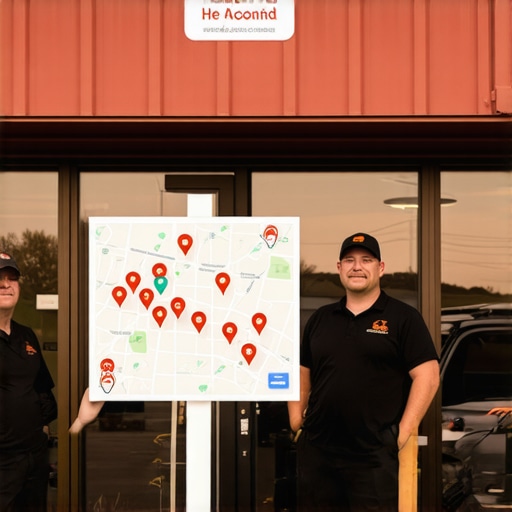
The specific type of photo update that actually moves the needle involves “Real Texas Proximity.” We instructed the technicians to take photos of their branded trucks in front of recognizable Fort Worth landmarks or neighborhood signs. A photo of a service truck in the Stockyards or parked on a residential street in Hulen Heights carries immense weight.
These photos are naturally geo-tagged by the smartphones that take them. When you upload a consistent stream of geo-relevant images, you are providing Google with visual proof that you are active and serving customers in specific zip codes. This is one of the most underrated google maps ranking factors.
Step 4: Review Velocity & Response Tactics
Everyone knows reviews are important, but “Review Velocity” – the speed and consistency at which you receive reviews – is what determines if you stay in the local map pack seo. A burst of 50 reviews in one month followed by silence for three months looks suspicious to Google.
We implemented a system to ensure a steady drip of reviews. But the real “secret sauce” was the response tactic. We stopped using generic “Thanks for the business!” responses. Instead, we used the specific review prompt that turns one-time Fort Worth shoppers into vocal advocates. We encouraged customers to mention the specific neighborhood and the pest problem we solved.
When a customer leaves a review saying, “The team handled a massive termite infestation at our home in North Fort Worth,” and the business responds with, “We were happy to help with your termite treatment in North Fort Worth,” it creates a relevance loop that is impossible for national brands to replicate. This is how you improve google maps ranking without needing external link juice.
Step 5: Hyperlocal Content & Schema Markup
Finally, we addressed the bridge between the website and the Map Pack. To truly dominate google business profile seo, your website must reinforce your physical location. We implemented local schema markup, which is essentially a piece of code that tells Google’s bots exactly where your service area boundaries are.
We also created hyperlocal content. Instead of a generic “How to get rid of bugs” blog post, we wrote about “The 5 Most Common Pests Found in Tanglewood Homes During Spring.” By mentioning specific neighborhoods and local environmental factors (like the Trinity River’s impact on mosquito populations), we anchored the business to the local geography. This technical google business profile optimization ensures that when someone nearby searches, your pin is the first one they see.
Conclusion: The Results
After 90 days of focusing strictly on these internal signals, the results were undeniable. This Fort Worth pest control shop didn’t just return to the Map Pack; they took the #1 spot for their most profitable keywords. On average, targeted GBP optimization helps pest control businesses increase qualified leads by 20%, and this case was no exception. Their call volume reached an all-time high, and their cost-per-lead plummeted because they were no longer paying for expensive, low-converting ads or unnecessary backlink packages.
If you are struggling to be seen, stop looking for the “magic” backlink. Start by auditing your data, optimizing your categories, and proving your local relevance through photos and reviews. You can use local seo tools to track your progress and see exactly where your “proximity gap” lies. In the world of local search, proximity and relevance will beat raw authority every single time.
Ready to reclaim your spot? Start with a thorough google business profile seo audit and watch your local visibility transform.