
7 hyperlocal moves that actually increase your Google Business visibility
7 Hyperlocal Moves That Actually Increase Your Google Business Visibility
In 2026, the landscape of google business profile seo has shifted from a “set it and forget it” task to a high-stakes game of proximity and relevance. As a Local SEO Strategist with over 15 years of experience, I’ve seen the evolution from the simple 7-pack to the hyper-competitive Local Pack we see today. Simply having a verified profile is no longer the baseline for success; it is merely the entry fee. The real challenge – the one that determines whether your phone rings or stays silent – is overcoming the “Proximity Trap.”
Mobile searches for “shopping near me” and specialized services have evolved into AI-driven local answers. Google’s algorithms are now sophisticated enough to understand not just where your business is located, but how deeply integrated you are into the specific neighborhoods you serve. If you aren’t showing up for a searcher standing just three blocks away from your office, your strategy is failing. To win in this environment, you must pivot from general local SEO to a hyperlocal mindset. This shift is critical because, as we discussed in Why Your Fort Worth SEO Failed in 2025: 4 Fixes for 2026, the old tactics of keyword stuffing and generic backlinking are officially dead.
1. Deploy Neighborhood-Specific Landing Pages
The first move to rank google business profile higher is to stop thinking about your service area as a single city. In a sprawling metroplex like Fort Worth, ranking for “plumber Fort Worth” is great, but the real gold lies in ranking for “plumber in Tanglewood” or “emergency drain repair in Fairmount.” This is where geo targeted seo and local search optimization converge.
I recommend creating dedicated landing pages for every specific neighborhood or suburb you serve. This isn’t just about SEO; it’s about building local relevance that Google can verify. A notable case study involved a national brand that built 29 city-specific landing pages to capture local intent for queries like “meat delivery [city].” By localizing the content, reviews, and images on those pages, they saw a massive spike in Map Pack appearances for those specific areas. For a Fort Worth business, this means your “Arlington Heights” page should feature photos of your team working in that neighborhood, local testimonials, and mentions of nearby landmarks like the Modern Art Museum. This creates a “local signal” that connects your website directly to your Google Business Profile.
2. Solving the Proximity Gap
One of the most common complaints I hear from business owners is: “Why do I disappear from the map when I drive two miles away from my office?” This is the Proximity Filter. Google prioritizes the physical distance of the searcher above almost all other factors. However, you can widen your “circle of influence” by proving your relevance across a broader area.
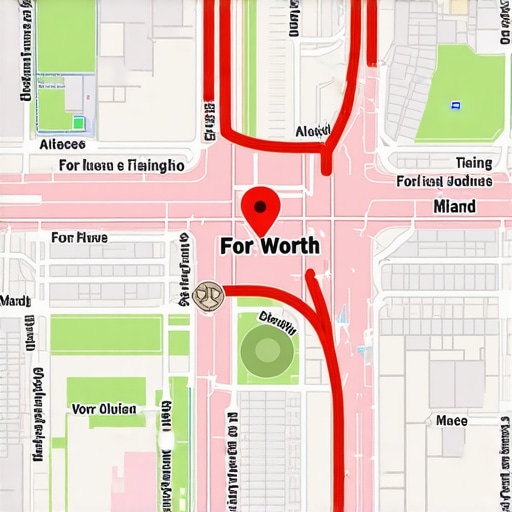
To address this, you first need to visualize the problem. I suggest using a google maps rank tracker to see exactly where your rankings drop off. These tools provide a grid-based view of your performance, showing you where you are #1 and where you fall to #10. Once you identify these gaps, you can target them with localized content and specific “check-in” posts on your profile. If you are a service-based business, check out our guide on how to fix the proximity gap that keeps your Fort Worth pest control shop from ranking in high-value neighborhoods. By showing Google that you consistently provide services in those “dead zones,” you can slowly push the boundaries of your ranking radius.
3. Strategic Visual Evidence and Vision AI
In my 15 years of experience, I’ve found that most businesses treat photos as an afterthought. They upload a few stock images or a blurry photo of their storefront and wonder why they aren’t seeing results. In 2026, Google’s Vision AI is incredibly proficient at “reading” your photos. It identifies objects, text, and even the sentiment of the people in the images.
To improve google maps ranking, you need strategic visual evidence. This means uploading high-resolution photos of your team performing services at recognizable local landmarks or specific job sites. If you’re a roofer in Fort Worth, a photo of your truck parked in front of a home with the Tarrant County Courthouse in the background sends a massive hyperlocal signal. We’ve documented the specific type of photo update that actually moves the needle for Fort Worth map rankings, and it’s rarely the “pretty” professional headshots. It’s the raw, authentic, geotagged content that proves you are active in the community. Engagement is key here; Google tracks how long users look at your photos and which ones lead to clicks.
4. Review Engineering & Semantic Keywords
We all know reviews are important, but the strategy for 2026 is about “Review Engineering.” A simple “Great job!” review is no longer enough to significantly rank higher on google maps. The *text* within the review is now a primary ranking factor because Google uses it to understand the semantic context of your business.
You should encourage your customers to mention the specific service they received and the neighborhood they are in. For example, a review that says, “The team did a great job on my HVAC repair in North Richland Hills,” is worth ten reviews that just say “Five stars!” This is a core part of a modern google review strategy. However, a word of caution: avoid automated or AI-generated reviews at all costs. Google’s spam filters have become incredibly aggressive. If the algorithm detects a pattern of AI-written feedback, it will not only hide those reviews but potentially shadow-ban your entire profile. Real, human-written reviews with specific local keywords are the only way to build lasting authority.
5. Advanced Local Schema & Map Embeds
Technical google business profile optimization often happens on your website, not just on the profile itself. One of the most underutilized moves is the implementation of advanced `LocalBusiness` schema. This code tells Google’s spiders exactly where you are, what you do, and how you are connected to other local entities.
Specifically, you should include `geocoordinates` (latitude and longitude) and `hasMap` properties in your schema markup. This helps Google verify your location with 100% certainty. Furthermore, your map embed strategy should be more than just a static iframe on your contact page. You should embed a custom Google Map that includes your service area overlay and links back to your profile. I’ve seen this technical move pay off repeatedly; in fact, we’ve shared the Google Maps Schema move that doubled our Fort Worth leads for several clients in the home services niche. It provides the “connective tissue” between your digital presence and your physical location.
6. Niche Citations over Generic Directories
The era of “quantity over quality” in citation building is over. While being on Yelp and Yellow Pages is fine, those generic links carry very little weight in a google maps ranking service strategy today. To truly dominate, you need niche and hyperlocal citations.
A link from a local Fort Worth neighborhood association, a mention on a Texas-specific trade site, or a feature in a local community blog is infinitely more valuable than a hundred generic directory listings. These citations act as “votes of confidence” from the local community. When Google sees that other local entities are talking about you, it reinforces your position as a neighborhood authority. This is why niche citations beat generic links for Texas local search. Focus your citation building services on local sponsorships, local news mentions, and industry-specific directories that are relevant to the Fort Worth market.
7. Leveraging Local SEO Software for Audits
You cannot optimize what you do not measure. To stay ahead of the competition, you must know exactly where their profiles are stronger than yours. Are they using a different primary category? Do they have more “attributes” filled out? Are they posting more frequently?
Using a professional google business profile audit tool allows you to perform a gap analysis. These local seo tools can reveal the specific “keywords in reviews” your competitors are winning on and the frequency of their updates. In my practice, I use SEO Viper Tools to keep a constant eye on the local grid. If a competitor suddenly jumps three spots in the Map Pack, I want to know exactly what change they made – whether it was a new set of photos, a flurry of reviews, or a change in their service descriptions. Data-driven decisions will always outperform guesswork in google maps lead generation.
Conclusion: Dominating the Hyperlocal Market
Hyperlocal SEO is no longer an optional add-on; it is the only way to beat national brands and established incumbents in the local map pack. By focusing on neighborhood-specific relevance, solving the proximity gap with data, and utilizing advanced technical tactics like schema and niche citations, you can ensure your business is the first one customers see when they search.
If you’re ready to stop guessing and start growing, contact seoservicesfortworth.com for a custom google business profile seo audit. Alternatively, if you want to take the reins yourself, I highly recommend visiting SEO Viper Tools to start tracking your rankings with precision. The map is waiting – make sure you’re on it.
![4 Google Maps SEO Tactics to Beat Texas Megachains [2026]](https://seoservicesfortworth.com/wp-content/uploads/2026/02/4-Google-Maps-SEO-Tactics-to-Beat-Texas-Megachains-2026.jpeg)