The exact moves your Fort Worth competitors use to dodge local search filters
The Exact Moves Your Fort Worth Competitors Use to Dodge Local Search Filters
If you are a business owner in Fort Worth, you’ve likely felt the frustration. You’ve optimized your website, you’ve collected reviews, and you’ve verified your address. Yet, when you search for your services from a coffee shop in the Near Southside or a home office in Tanglewood, your business is nowhere to be found in the Map Pack. Meanwhile, a competitor three miles away seems to follow your every move, appearing consistently at the top of the results.
As the Senior SEO Analyst at Blueprint Digital and leader of the “Conversion Rock Stars” team, I’ve spent years deconstructing these anomalies. In 2026, the game has changed. Ranking isn’t just about having the right keywords anymore; it’s about navigating an increasingly complex web of Google’s algorithmic filters. These filters – specifically the proximity, review, and spam filters – are the silent gatekeepers of the Local Map Pack. Your competitors aren’t necessarily “better” than you; they’ve simply learned how to dodge the filters that are currently ghosting your business.
To truly understand how to win, you need to stop thinking about “ranking” and start thinking about “filter avoidance.” This is the core of GMB Optimization in Fort Worth: Proven Techniques to Dominate Local Searches. In this guide, I’m going to pull back the curtain on the exact moves being used right now in the Fort Worth market to bypass these filters and secure a permanent spot in the local search spotlight.
The Proximity Filter: Why You’re Ghosted in Your Own Neighborhood
The most powerful filter Google employs is the Proximity Filter, often referred to as “Distance Bias.” In the 2026 search landscape, Google’s primary goal is to provide the most hyper-local result possible. However, this often leads to the “Fort Worth proximity glitch,” where a business physically located in the Stockyards might be filtered out of results for a user standing just a few blocks away in the Northside because Google has “clustered” too many similar businesses in that radius.
Your competitors are beating this by expanding their “reach radius” through localized relevance. They understand that proximity is relative. If Google perceives your business as the most authoritative “Fort Worth” entity for a specific service, it will widen the physical distance it is willing to show you to users. This is why a plumber based in North Richland Hills can sometimes outrank a shop physically located in downtown Fort Worth for downtown searches.
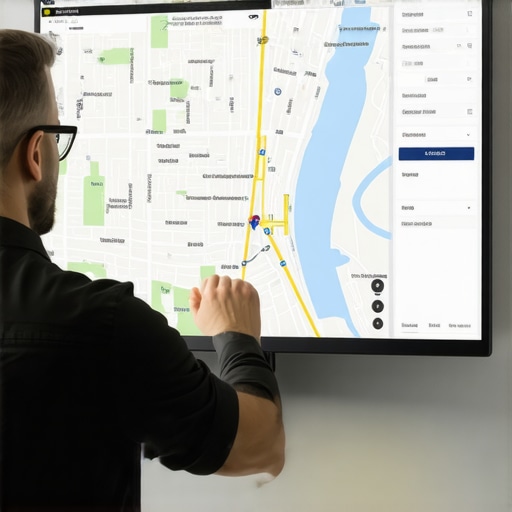
To combat this, successful local businesses are utilizing advanced local seo tools to map out exactly where their visibility drops off. In Fort Worth, ranking fluctuations can happen every few blocks. If you are standing on Magnolia Avenue, the Map Pack looks different than it does on 7th Street. By identifying these “dead zones,” competitors can tailor their local content – such as neighborhood-specific landing pages – to signal to Google that their relevance extends beyond their front door.
The three pillars of the local algorithm remain: Proximity, Relevance, and Prominence. However, when proximity is working against you, you must over-index on relevance and prominence. This is how the smallest shops in the Metroplex are currently beating national brands with massive budgets. They are focusing on “Real Texas Proximity” – proving they serve the community through local engagement and geo-specific data points that Google’s AI-driven search can’t ignore. For a deeper dive into why your visibility might be fluctuating, check out The Secret Proximity Filter Hiding Your Fort Worth Shop From Nearby Customers.
The Review Filter: Why Your Best Feedback is Missing
One of the most common complaints I hear at Blueprint Digital is: “My customer left a 5-star review yesterday, but it’s not showing up on my profile!” This is the Review Filter in action. In 2026, Google’s spam detection for reviews is more aggressive than ever. It doesn’t just look at the content of the review; it looks at the metadata behind it.
If a review is posted from a device that hasn’t physically been to your location, or if the user’s IP address is flagged as being outside of the Fort Worth area, the filter often triggers. Competitors who are dominating the Map Pack have figured out how to coach their customers to provide “filter-proof” feedback. They aren’t just asking for reviews; they are ensuring those reviews are rich with local context.
A “fix” for the review filter involves encouraging customers to mention specific Fort Worth landmarks or neighborhoods in their text. For example, a review stating, “The best roofing service I’ve used in Clearfork,” carries significantly more algorithmic weight than “Great service.” Furthermore, reviews that include photos taken at the job site – containing embedded GPS metadata – are almost never filtered. This acts as a physical verification of the service rendered.
If you’ve noticed a sudden drop in your review count or a stagnation despite happy customers, you need to understand How to fix the review filter that hides your best Fort Worth customer feedback. Many businesses are inadvertently triggering these filters by using automated review solicitation tools that don’t account for the local “footprint” required by the 2026 algorithm. To keep a pulse on how your reviews are impacting your position, a google maps rank tracker is essential for seeing the correlation between review velocity and ranking shifts.
Technical Moves: Map Embeds and Geo-Tagging
Beyond content and reviews, there are technical maneuvers that Fort Worth’s top-ranking businesses use to signal authority. One of the most effective, yet often misunderstood, strategies is the “specific map embed move.” In 2026, simply sticking a standard Google Map on your contact page isn’t enough. The winners are using dynamic, multi-layered map embeds that incorporate custom KML (Keyhole Markup Language) files and geo-tagged data points.
These advanced embeds do more than show your location; they define your service area for Google’s crawlers. By embedding a map that highlights your recent projects across Fort Worth – from Hulen to Alliance – you are providing a roadmap of your business’s activity. This signals to Google that you are a legitimate, active participant in the local economy, which helps you bypass the “spam filter” that often catches businesses with static, unoptimized websites.
Geo-tagging is another critical component. Every image on your website and your Google Business Profile (GBP) should be optimized with latitude and longitude coordinates specific to your Fort Worth service area. When you combine geo-tagged content with “local seo backlinks” – links from other Texas-based domains like local chambers of commerce, Fort Worth blogs, or neighborhood associations – you create a “local wall” that is very difficult for competitors to penetrate. This technical synergy is what we discuss in The specific map embed move that actually moves the needle for Texas shops.
Generic backlinks from high-authority national sites are losing their punch in local search. In 2026, a link from a Fort Worth community site is worth ten links from a generic marketing blog. Your competitors know this, and they are aggressively pursuing local digital PR to solidify their geographic authority.
Competitor Awareness: How Small Fort Worth Shops Outrun Big Brands
There is a common misconception that the business with the biggest marketing budget wins the Map Pack. In Fort Worth, we see the opposite happening every day. Small, agile businesses are using “City Page SEO” to run circles around national franchises. A national franchise often has a rigid SEO strategy that treats Fort Worth the same as Phoenix or Philadelphia. A local expert, however, knows that Fort Worth has a unique search identity.
Take, for example, a local plumber we worked with. By focusing on hyper-local content – writing about the specific hard water issues in Tarrant County and the common plumbing quirks of historic homes in Fairmount – they were able to build massive relevance. They didn’t need a million-dollar budget; they needed a “Fort Worth” budget. We documented this exact strategy in How we helped a Fort Worth plumber dominate the map pack without buying backlinks.
Competitor awareness also means watching for “Map Pin Hijacking.” Some unscrupulous competitors try to move their map pins closer to high-traffic areas or create fake “ghost” locations to capture more leads. If your ranking has suddenly vanished, it might not be your fault – it could be a competitor’s black-hat tactic triggering a filter on your profile. You need to know Why Your Fort Worth Map Pin Vanished: 3 Local SEO Fixes [2026] to identify and report these issues before they tank your revenue.
Future-Proofing for 2026: The Rise of AI and Zero-Click Search
As we move deeper into 2026, the transition from Google My Business (GMB) to Google Business Profile (GBP) is fully complete, and AI-driven search (like SGE – Search Generative Experience) is the standard. This has led to a significant rise in “Zero-Click Searches,” where users get all the information they need – phone number, hours, reviews, and even AI-summarized answers – directly from the Google search results page without ever clicking through to a website.
To survive in a zero-click world, your GBP must be an authoritative source of truth. This means utilizing every feature Google offers, from “Products” and “Services” to “Google Posts” that are updated weekly. Your competitors are likely using a google maps ranking service to ensure their profile is 100% optimized and that they are the “preferred” answer for AI-generated local queries.
The 2026 algorithm prioritizes “Entity Authority.” Google wants to know that your business is a real, trusted entity. This is why consistent NAP (Name, Address, Phone Number) data across the web is still vital, but it’s now supplemented by your “Digital Footprint.” Are you mentioned in local news? Do you have a presence on Texas-specific social media groups? These are the signals that future-proof your rankings against the next wave of algorithmic updates. If you’re unsure where you stand, your first step should be a local SEO report to see if your data is actually reaching the customers you think it is.
Conclusion: Take Control of Your Local Visibility
Winning the local search game in Fort Worth isn’t a matter of luck; it’s a matter of strategy. Your competitors are dodging filters by being more local, more technical, and more proactive than the average business owner. By understanding the mechanics of the proximity filter, the nuances of the review filter, and the power of technical map moves, you can stop being a victim of the algorithm and start being its master.
At Blueprint Digital, our “Conversion Rock Stars” team is dedicated to helping Fort Worth businesses navigate these exact challenges. We don’t just “do SEO”; we build local dominance. If you’re tired of being ghosted by Google and ready to see what a professional google business profile seo strategy can do for your bottom line, it’s time to take action.
Don’t let another month go by with your competitors taking your leads. Perform a comprehensive google business profile audit today or reach out to me, Aaron VP Kruse, for a strategy session tailored to the Fort Worth market. Let’s make 2026 the year your business finally owns the Map Pack.
Ready to dominate? Contact Us today.