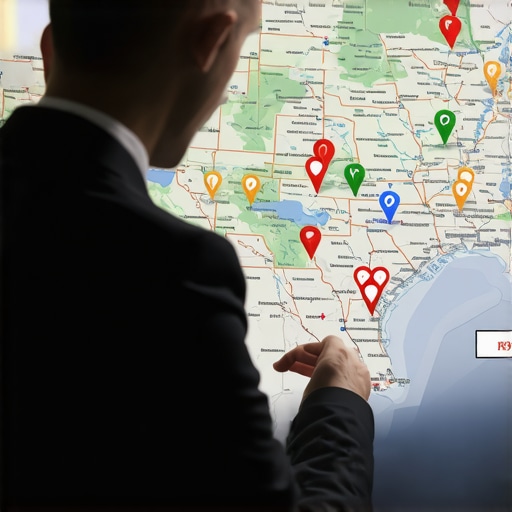
My Personal Journey to Elevate My Texas Business with Google Maps SEO
Starting my small business in Fort Worth, Texas, I quickly realized that local visibility was crucial. I remember spending countless hours trying to figure out why some businesses appeared at the top of Google Maps while others, just as deserving, seemed to vanish into the digital background. My breakthrough came when I decided to optimize my Google Maps listing, and let me tell you, the results were astonishing.
Discovering the Power of Local SEO and Google Maps Optimization
When I first delved into Google Maps optimization techniques, I was amazed at how much a well-structured profile could impact my local search rankings. I learned that factors like accurate business info, relevant categories, and positive reviews play a pivotal role. Implementing these strategies made my business more discoverable to potential customers right here in Texas.
Why Local SEO Strategies Are Essential in Texas’s Competitive Market
Living and working in Fort Worth, I saw firsthand how fierce the local competition is. Optimizing my Google My Business (GMB) profile boosted my visibility on Google Maps, which in turn increased foot traffic and sales. According to Fort Worth SEO strategies, staying ahead in local search results is vital for business growth. It’s not just about being online; it’s about being the first choice for local customers.
What Are the Key Elements of an Effective Google Maps SEO Strategy?
How Can I Ensure My Business Dominates Local Search Results?
To truly dominate local searches, I focused on leveraging current SEO trends and continuously refining my GMB profile. This includes regular posting, responding to reviews, and adding high-quality images. I also paid attention to NAP consistency (Name, Address, Phone Number), which is crucial for local SEO success. Remember, Google prioritizes relevance and proximity, so making sure your info is spot-on can make all the difference.
Sharing My Experience and Encouraging Your Local SEO Journey
If you’re like me, eager to grow your Texas business, I encourage you to invest time in optimizing your Google Maps listing. It’s a straightforward yet powerful way to enhance your local visibility. Want to learn more? I recommend exploring detailed guides like effective marketing tactics tailored for Texas businesses.
Have you tried optimizing your Google Maps profile? Share your experiences or ask questions below; I’d love to hear how local SEO has impacted your business!
Unveiling the Hidden Layers of Local SEO for Fort Worth Success
As I continued my journey into local SEO mastery, I discovered that beyond the basics lies a complex web of strategies that can truly elevate your business in Fort Worth. One such tactic involves harnessing the power of future-proof SEO techniques designed specifically for competitive markets. This includes leveraging schema markup, local backlinks, and hyper-local content that resonates with the community, building authority and trust simultaneously.
What Are the Nuances That Make or Break Your Google Maps Visibility?
Are You Overlooking the Subtle Signals That Google Uses to Rank Your Business?
Google’s algorithm considers a multitude of signals, many of which are often underestimated. For example, the consistency of your NAP (Name, Address, Phone Number) across various online directories, reviews, and your website creates a cohesive digital footprint that Google trusts. Additionally, the quality and frequency of user-generated content, such as reviews and photos, significantly influence your rankings. Regularly updating your GMB profile with fresh content and engaging with customer reviews demonstrates activity, signaling relevance and authority to Google.
According to Fort Worth SEO experts, understanding and optimizing these nuanced signals can be the decisive factor in outranking competitors, especially in densely populated markets.
How Can You Build a Local SEO Strategy That Resists Market Fluctuations?
What Practical Steps Can Fort Worth Business Owners Take Today to Fortify Their Rankings?
Building resilience into your local SEO requires a strategic blend of consistency, innovation, and community engagement. Start by auditing your existing GMB profile and ensuring every detail — from categories to hours of operation — is accurate and optimized. Then, focus on generating authentic reviews and responding to them promptly, which fosters trust and enhances visibility.
Moreover, implementing a comprehensive local SEO plan involves optimizing your website for local keywords, creating community-centric content, and building backlinks from reputable local sources. These efforts not only improve rankings but also establish your business as an integral part of Fort Worth’s vibrant economy.
For more insights, explore how you can leverage effective marketing tactics tailored to your local market, enabling sustainable growth and visibility.
Curious to see how these strategies can be customized for your unique business? Share your experiences or ask questions below — I love discussing how local SEO can unlock your Fort Worth business’s full potential!
Unearthing the Subtle Signals That Elevate Your Google Maps Visibility
As I’ve navigated the complex landscape of local SEO, I’ve come to realize that success hinges on understanding and optimizing the nuanced signals that Google uses to rank your business. It’s easy to focus on obvious elements like reviews and NAP consistency, but the real game-changer lies in the subtleties—those tiny, often overlooked details that, when properly managed, can push your visibility to new heights.
One such subtlety is the strategic use of schema markup. This structured data helps Google better understand your business specifics, highlighting elements like services, hours, and geographic relevance, which can significantly influence your local rankings. Incorporating schema isn’t just technical jargon; it’s about communicating your business’s identity more effectively to search engines, which in turn favors your listing during local searches.
Moreover, managing your online reviews isn’t merely about quantity but quality and relevance. Encouraging satisfied customers to share detailed feedback creates rich, keyword-infused content that Google values highly. Responding thoughtfully to reviews demonstrates active engagement, signaling to Google that your business is vibrant and trustworthy. These interactions build a digital ecosystem that Google’s algorithm perceives as authoritative, especially when combined with a cohesive and consistent online presence.
How Do Local Backlinks and Community Engagement Influence Your Rankings?
Beyond on-page and profile optimizations, cultivating backlinks from reputable local sources can be a pivotal strategy. Links from local newspapers, community blogs, or industry associations act as endorsements, boosting your authority within the Fort Worth ecosystem. These backlinks are like digital word-of-mouth, reinforcing your relevance and trustworthiness in Google’s eyes. I’ve found that participating in community events, sponsoring local initiatives, or collaborating with other businesses creates natural opportunities for backlinks and social signals that Google values immensely.
Reflecting on my journey, I realize that fostering genuine community relationships has been one of the most rewarding and effective ways to enhance local SEO. It’s not just about rankings; it’s about embedding your brand into the fabric of the local economy and culture. When your business becomes a trusted part of the community, your visibility naturally rises, creating a sustainable cycle of growth and reinforcement.
Can Advanced Local SEO Techniques Sustain Your Business Amid Market Fluctuations?
Absolutely, and this is where the real mastery lies. Building resilience in local SEO involves staying ahead of algorithm updates, continuously refining your strategies, and maintaining authentic engagement. Regularly auditing your Google My Business profile ensures that all details are current, accurate, and aligned with evolving market trends. Simultaneously, diversifying your local content—such as creating blog posts about local events, highlighting customer success stories, or sharing community news—can solidify your authority and relevance over time.
Furthermore, leveraging future-proof SEO techniques like local schema, voice search optimization, and hyper-local content ensures your business remains competitive, even as search behaviors evolve. These strategies are not static; they require ongoing adaptation and a keen understanding of your local market dynamics.
If you’re eager to deepen your local SEO expertise and build a resilient, thriving presence in Fort Worth, I invite you to explore these advanced tactics further. Share your experiences or ask questions below—your insights could inspire others on their journey to local search mastery. Remember, in the ever-changing landscape of local SEO, continuous learning and adaptation are your best allies.
Deciphering Google’s Hidden Signals for Long-Term Local SEO Success
In my journey through Fort Worth’s competitive local landscape, I’ve come to understand that mastering Google’s subtle ranking signals is essential for sustained visibility. Beyond the basics of reviews and NAP consistency, Google’s algorithm considers intricate factors like user engagement metrics, behavioral signals, and semantic relevance. For instance, tailoring your content to match local search intent and leveraging advanced schema markup can significantly enhance your prominence. According to Moz’s Local Search Ranking Factors report, structured data implementation and review signals are among the most impactful elements for local rankings, underscoring the importance of technical finesse alongside content quality.
How Can Fort Worth Businesses Leverage Schema Markup to Gain a Competitive Edge?
Implementing schema markup is more than a technical upgrade; it’s a strategic move to communicate your business’s essence more effectively to search engines. By incorporating detailed schemas—covering services, operating hours, and geographic specifics—you help Google better understand your offerings within the local context. This clarity can lead to rich snippets, enhanced visibility, and higher click-through rates. I’ve found that aligning schema data with your Google My Business profile creates a cohesive digital story that search engines favor. For a comprehensive guide, see this resource on future-proof SEO techniques.
Building an Ecosystem of Local Authority Through Content and Community Engagement
Long-term SEO resilience hinges on fostering genuine authority within your local ecosystem. This involves creating hyper-local content that resonates deeply with Fort Worth’s unique culture and community interests. Think about producing blog posts highlighting local events, sponsoring neighborhood initiatives, or collaborating with local influencers. These efforts not only generate valuable backlinks but also reinforce your brand’s authenticity and trustworthiness. Participating in community activities—like charity runs, local expos, or business alliances—amplifies your presence and creates natural opportunities for social signals and backlinks, which are highly valued by Google.
Can Hyper-Local Content and Community Integration Sustain SEO Gains Amid Market Fluctuations?
Absolutely. A resilient local SEO strategy integrates dynamic, community-centered content with ongoing engagement. By continuously adapting your content to reflect local trends, news, and customer stories, you cultivate relevance and authority that withstand market shifts. Regularly auditing your profile and updating your content ensures your business remains top-of-mind for local consumers. Additionally, diversifying your outreach—such as hosting local webinars or participating in industry forums—strengthens your digital footprint and creates a multi-layered authority. For deeper insights, explore this guide on effective marketing tactics in Texas.
Engaging with Advanced SEO Techniques to Future-Proof Your Fort Worth Business
To truly future-proof your local SEO, embracing evolving trends like voice search optimization and mobile-first strategies is crucial. Voice search, in particular, is reshaping how local queries are conducted, making conversational keywords and natural language content essential. Additionally, optimizing for mobile devices ensures your visibility isn’t compromised as user behavior shifts. Staying ahead also involves keeping abreast of algorithm updates, which often prioritize user experience signals such as site speed, security, and engagement metrics. Consistently refining your strategies with these advanced techniques creates a resilient foundation for long-term growth.
If you’re ready to elevate your Fort Worth business with sophisticated local SEO tactics, I invite you to connect and share your experiences. Engaging in ongoing dialogue allows us to learn from each other’s successes and challenges, fostering a community of proactive local entrepreneurs committed to mastery in search visibility. Drop your questions or insights in the comments—let’s grow together!
Things I Wish I Knew Earlier (or You Might Find Surprising)
The Power of Consistency
When I first started optimizing my Google Maps listing, I underestimated how crucial consistency was. Ensuring my NAP information matched everywhere online created a cohesive digital footprint that Google trusted. It’s a simple step, but it made a big difference in my local rankings.
Reviews Are More Than Just Feedback
Early on, I thought reviews were just for social proof. But I discovered that detailed, keyword-rich reviews actively boost your relevance in local searches. Responding to reviews also signals active engagement, which Google favors.
Visual Content Matters
Adding high-quality photos to my profile wasn’t a priority at first, but I realized that vibrant images attract more clicks and engagement. This increased user interaction can positively influence your local SEO standing.
Community Engagement Is a Hidden Gem
Participating in local events or sponsoring community initiatives surprisingly helped my backlinks and visibility. Building genuine relationships with local organizations reinforced my authority and trustworthiness in Fort Worth.
Technical SEO Isn’t Just for Websites
Implementing schema markup on my website, aligned with my Google My Business profile, helped Google better understand my business. This technical finesse improved my chances of appearing in rich snippets and local packs.
Resources I’ve Come to Trust Over Time
- Google’s My Business Help Center: The official resource provides comprehensive guidance straight from Google, making it a go-to for accurate and updated information.
- Moz Local Search Ranking Factors: This detailed report helped me understand what signals matter most for local SEO, especially the importance of reviews and schema.
- BrightLocal Blog: Their expert articles and case studies offered practical tips and inspired me to experiment with new strategies.
- Search Engine Journal: A trusted source for the latest trends and algorithm updates in local SEO, keeping me ahead of the curve.
Parting Thoughts from My Perspective
Mastering Google Maps SEO has been a game-changer for my Fort Worth business. It’s not just about ranking higher; it’s about building trust and embedding yourself into the local community. The key takeaway? Be consistent, engage authentically, and stay curious about new strategies. If you’re looking to elevate your local presence, don’t hesitate to dive deep into these tactics and explore the effective marketing tactics tailored for Texas businesses. I’d love to hear your experiences—share your journey or ask questions below, and let’s grow together in this vibrant local market!

![Steal Local Traffic: 3 Texas Business Ranking Secrets [2026]](https://seoservicesfortworth.com/wp-content/uploads/2026/02/Steal-Local-Traffic-3-Texas-Business-Ranking-Secrets-2026.jpeg)

Reading about your journey to improve your local visibility really resonated with me, especially the part about how simple details like NAP consistency can make a huge difference. I’ve recently started exploring Google Maps optimization for my own business in Austin, and it’s fascinating how even small tweaks can lead to better rankings and more foot traffic. I’m particularly intrigued by the idea of leveraging schema markup as you mentioned. I’ve read that structured data can significantly enhance local search results, but I’d love to hear more about your experience implementing it. Did you face any challenges, and how did you overcome them?
Also, engaging with the local community seems like such a powerful strategy. Do you find that direct involvement in local events or collaborations helps boost your online authority and trustworthiness? I’d appreciate any tips or insights you could share based on your experience. Thanks for sharing such detailed strategies—really inspiring to see how dedicated effort can transform a small business in such a competitive market.
Reading about your journey with Google Maps SEO in Fort Worth really hit home for me. The emphasis on NAP consistency and community engagement is something I’ve seen firsthand in my own local business. Initially, I underestimated how much these subtle signals impact rankings. Since actively updating my profile and participating in neighborhood events, I’ve noticed a steady rise in local inquiries and foot traffic. What’s been your most effective community engagement tactic? I’ve found that forming genuine local partnerships not only boosts visibility but also builds trust with customers.
I really appreciated your detailed recount of how optimizing your Google Maps listing transformed your local visibility in Fort Worth. As someone who’s also been delving into local SEO strategies, I found your emphasis on NAP consistency and community engagement quite insightful. I’ve noticed that regularly updating Google My Business with fresh photos and posts can significantly impact engagement metrics, which Google seems to favor in rankings. One thing I’ve been curious about is how to effectively encourage satisfied customers to leave detailed reviews without making it seem pushy. Have you found particular approaches that work well?
Also, your mention of schema markup caught my attention. I’ve started experimenting with structured data on my website, but I’ve faced challenges with validation errors and ensuring the schema aligns perfectly with Google My Business info. Do you have tips on how to troubleshoot or validate schema implementation efficiently? Overall, your journey underscores how continuous optimization and authentic community involvement make a real difference. I’d love to hear more about any specific tactics that helped you sustain your ranking growth over time.
Your experience really highlights how crucial it is to continuously optimize not just online, but also offline community ties for sustained local SEO success. I started focusing more on local partnerships and community events after reading about their impact, and I’ve noticed a tangible difference in both visibility and trust with my audience. This makes me wonder, how do you prioritize your efforts between technical SEO, like schema markup, and community engagement, especially when dealing with limited time and resources? Do you find one leads to quicker results, or is a combined approach most effective? I believe that community engagement really humanizes the brand, but technical optimizations seem to give immediate ranking boosts. Would love to hear your thoughts on balancing these strategies for long-term growth.
Your detailed journey about leveraging Google Maps SEO in Fort Worth is truly inspiring. I especially resonated with the part about how consistency in NAP information and active community engagement can make a noticeable impact. In my experience, maintaining up-to-date and accurate business details across all directories really does build credibility with both Google and local customers. I’ve also started experimenting with schema markup recently, which seems promising for enhancing local search listings. One challenge I faced was ensuring the schema data seamlessly aligns with my Google My Business profile; tools like Google’s Rich Results Test have been helpful in troubleshooting validation errors.
On community engagement, I’ve found that collaborating with local influencers and participating in neighborhood events have significantly boosted my brand presence. How do you balance your time between technical SEO updates, like schema implementation, and offline community activities? Do you find one more effective for quick wins, or does a combined approach yield long-term benefits? Looking forward to hearing more about your strategies for sustaining growth in a competitive market like Fort Worth.
Your personal journey really underscores how crucial ongoing optimization is for local SEO success. I’ve also found that consistent review management and engaging content updates can dramatically improve visibility on Google Maps. The part about schema markup resonated with me—initially, I thought it was just technical jargon, but I’ve started implementing it on my business website, and I’ve seen positive changes in local rich snippets. Did you encounter any particular challenges with schema, such as schema validation errors or understanding how to match schema data with your Google My Business info? I’d be interested to hear how you tackled those hurdles.
Regarding community engagement, I agree that forming local partnerships and participating in community events can boost your authority and trust. In my experience, sponsoring a local charity event not only helped with backlinks but also enhanced customer trust because they see your business actively invested in the community. Do you have any tips on balancing online SEO strategies with offline community involvement, especially in a busy market like Fort Worth? It seems that blending both approaches can truly create a resilient local presence.