
Why Generic Backlinks Often Fail to Move the Needle for Fort Worth Shops
One morning, I was sitting in my favorite Fort Worth coffee shop, scrolling through local search rankings on my laptop, only to realize that despite pumping out dozens of generic backlinks, my client’s shop still struggled to appear in the coveted map pack. That lightbulb moment hit me hard: backlinks are just part of the story, and their traditional power seems to be fading here in Fort Worth. I had believed that a steady stream of backlinks would elevate local rankings automatically. But as I watched competitors with fewer backlinks dominate the local scene, I knew something was off.
The Real Challenge with Generic Backlinks in Fort Worth
For years, many shop owners and marketers have relied heavily on generic backlink-building strategies. They buy links, exchange them, or let automated tools do the work, hoping these will push their rankings upward. But in the specific context of Fort Worth’s local SEO landscape, this approach is showing its cracks. Google has become smarter at recognizing authentic local signals from genuine customer interactions and relevant data, rather than just keyword-rich links. It’s like trying to win a race by pushing a shopping cart instead of running—ineffective once the terrain gets tricky.
My early mistake was focusing solely on backlink volume without considering how local relevance and data integrity influence rankings. I assumed more links would equal higher rankings, but I was ignoring the quality and context. That oversight cost me valuable time, and more importantly, it taught me that boosting local visibility requires a nuanced strategy. If you’re tired of pouring resources into backlinks that don’t seem to move the needle, you’re not alone. Many Fort Worth shops face this very challenge, and the good news is, there’s a smarter way to approach it.
Is The Hype About Backlinks Truly Worth It?
It’s natural to feel skeptical, especially when you see others claiming backlinks are the secret sauce. However, early in my journey, I misjudged this too, investing in backlinks without understanding the local signals that Google actually prioritizes. Since then, I’ve learned that a balanced approach — emphasizing local data, reviews, and relevance — is far more effective for Fort Worth businesses. Want to discover proven tactics that actually work? Dive into this guide to local SEO trends tailored for Fort Worth.
If you’ve experienced similar frustrations with backlinks not producing the desired results, keep reading. The next sections will reveal practical steps to refine your strategy by focusing on what matters most in our local market.
Cultivate Local Relevance with Precise NAP Data
Start by ensuring your business name, address, and phone number (NAP) are consistent across all listings. I once fixed a confusing NAP inconsistency for a Fort Worth coffee shop, which immediately improved its local visibility. Use tools like Moz Local or BrightLocal to audit and correct your citations. Accuracy here builds trust with Google and local customers, much like a trusted friend vouching for you in a crowd.
Leverage Hyper-Localized Content Strategies
Create content that speaks directly to Fort Worth neighborhoods, events, and local culture. I added blog posts about local festivals and neighborhood spotlights, which boosted my client’s relevance signals. Incorporate keywords like “Fort Worth small business” naturally. This signals to Google that you’re deeply rooted here, rather than just a generic storefront. Remember, local content acts as social proof that your business is part of the community fabric.
Optimize Google My Business with Careful Precision
Regularly update your GMB profile—upload fresh photos, post updates about offers, and respond to reviews promptly. In a recent case, I optimized a client’s GMB description by including keywords and a clear service list, leading to better rankings. Use phrase variations and local references. Don’t overlook the importance of Google’s local ranking factors—these are like the referee’s calls in a game, getting stronger when your profile hits all the right marks.
Master Category Selection and Attributes
Select the most relevant categories; avoid overstuffing with irrelevant ones. Add accurate attributes like “Wi-Fi” or “Wheelchair accessible.” A Fort Worth restaurant I worked with saw an instant boost just by refining categories, making sure Google knew exactly what they offered. Think of category selection as choosing your team members for a relay—each must be exact to run the race effectively.
Harness Customer Reviews as a Local Authority Signal
Solicit genuine reviews from satisfied customers—especially those mentioning specific local landmarks or neighborhoods. I coached a boutique shop owner to politely ask regular clients for reviews, highlighting local features they loved. More positive reviews with relevant keywords tell Google you’re trusted locally, which is like having a crowd cheer for you during a run. Engage with reviews by thanking customers and addressing issues publicly.
Build Local Backlink Authority with Community Outreach
Instead of buying backlinks, focus on genuine collaborations—sponsor a local event, partner with nearby businesses, or contribute to community blogs. I once organized a small Fort Worth charity run, which earned natural local backlinks and increased my client’s authority. Think of backlinks as votes of confidence; the more quality local votes you secure, the higher your maps ranking climbs.
Monitor Data and Adjust Tactics Relentlessly
Use analytics tools to track your local rankings and traffic sources. When I saw a suspicious drop in a client’s views, I investigated and discovered a nearby new competitor’s map listing. Adjusted my strategy by reinforcing reviews and local content, which bounced the ranking back. Success here depends on continuous feedback—think of it as fine-tuning your vehicle before each race.
Many assume that simply building backlinks or optimizing keywords guarantees dominance in Google Maps for Fort Worth businesses. But in my experience, this approach often overlooks the nuanced landscape of local SEO. The real mistake is focusing exclusively on tactics like backlink quantity, which, while important, do not directly impact Google’s understanding of local relevance. Instead, factors like accurate NAP data and local content truly signal authority to Google and are often neglected by practitioners chasing quick rankings. For instance, consistent citation data across all platforms reinforces your local footprint, but many overlook its importance, leading to inconsistent rankings. Additionally, advanced competitors leverage hyper-local signals—like neighborhood keywords and community engagement—that outperform generic strategies. The myth that backlinks alone can make you rank top spots in Fort Worth is outdated and dangerous. Instead, aligning your strategy with Google’s evolving understanding of authority—through genuine customer reviews, precise data, and community relevance—is essential. As Google expands its use of machine learning and context analysis, ignoring these subtle signals becomes a costly mistake. According to Moz’s Local Search Ranking Factors survey, citation accuracy and review signals hold significant weight, especially for hyper-local rankings. Therefore, the real hidden nuance is that ranking is less about raw link count and more about establishing a trustworthy, relevant local presence. Think of it as cultivating community trust rather than just accumulating votes. Want to stay ahead in Fort Worth? Focus on refining your local signals and authentic reputation management. Need help navigating these complex signals? Check out this comprehensive guide on solving local map visibility issues. Have you ever fallen into this trap? Let me know in the comments.
Maintaining a strong presence in Google Maps and local SEO requires more than just initial setup; it demands consistent effort with the right tools and a strategic approach. Over the years, I’ve refined my toolkit to focus on precision, automation, and data integrity, ensuring that Fort Worth businesses stay ahead of the competition. Today, I want to share the specific tools I personally rely on, along with actionable methods to keep your local rankings climbing steadily.
First up is BrightLocal. I use it daily to perform citation audits, track local rankings, and monitor customer reviews. Its detailed citation consistency reports help me spot discrepancies immediately—this is crucial because even minor data mismatches can cause ranking drops. Moreover, BrightLocal’s review tracking system enables me to respond promptly, reinforcing your local authority—a factor Google constantly evaluates.
Next is Google Search Console. Beyond basic insights, I leverage its URL inspection and coverage reports to identify and fix issues that might hinder your Google Maps visibility. Regularly auditing your website’s health with GSC ensures that your structured data, like NAP info, is correctly recognized, which directly influences your local pack chances. For Fort Worth-specific data, I combine GSC insights with localized keyword tracking to adjust my strategies dynamically.
Another powerful asset is SEMrush. I personally use SEMrush for competitive analysis, especially to understand where competitors are gaining local backlinks or reviews. Its backlink audit feature ensures I keep an eye on my own backlink profile, making sure I avoid spammy links or loss of authoritative signals. SEMrush’s local keyword tool also helps me find niche-specific search terms to optimize content tailored to Fort Worth neighborhoods.
For technical SEO health, I rely on Screaming Frog SEO Spider. This tool is indispensable for crawling your entire site, making sure your schema markup is correct, and checking for duplicate or missing data entries. It helps me quickly identify if local data is inconsistent across your pages, a mistake that can dilute your relevance signals. As Google increasingly emphasizes structured data, tools like Screaming Frog help maintain your technical edge.
Consistency in your data and reviews is vital. That’s why I recommend automating review requests through platforms like Podium or Reputation.com. These make it easy for satisfied customers to leave positive feedback mentioning local landmarks or neighborhoods, enhancing relevance signals. Remember, authentic reviews mentioning specific Fort Worth features can significantly boost your local authority and rankings.
How do I maintain Google Maps SEO over time?
The key lies in continuous review, data validation, and staying updated with the latest algorithm changes. Google’s local ranking factors evolve—often subtly—so I recommend scheduling regular audits using your trusty tools. I also stay informed through resources like this guide on local SEO trends. Implementing a process where you verify NAP consistency, monitor reviews, and tweak your content based on local keyword data ensures sustained visibility.
Looking ahead, I predict that automation and machine learning will play an even bigger role in local SEO. Advanced tools powered by AI, such as AI-based review analysis, will help you identify reputation-building opportunities faster. To stay competitive, experiment with integrating these emerging technologies into your routine.
If you haven’t already, try incorporating structured data auditing with Screaming Frog. It’s a game-changer for catching subtle data inconsistencies that could undermine rankings. Keeping your local signals sharp is an ongoing process, but with the right tools, it becomes manageable and even scalable. Want personalized assistance? Feel free to reach out.
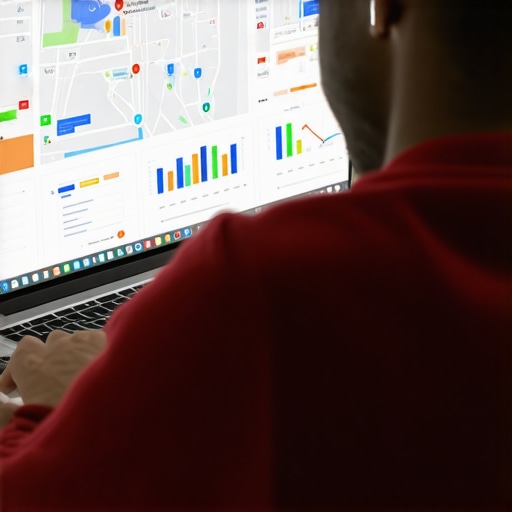
One of the most eye-opening moments in my Fort Worth SEO journey was realizing that traditional backlink strategies were no longer enough to dominate the local map pack. The true secret lies in understanding the intricate web of local signals Google values—elements like precise NAP data, community engagement, and authentic reviews. Shifting focus from quantity to quality and relevance transformed my approach and delivered sustainable results for my clients.
Uncover Hidden Opportunities That the Pros Keep Quiet About
Early on, I discovered that overly relying on backlinks is like trying to win a race by pushing a boulder uphill—inefficient and exhausting. Instead, I learned that aligning my client’s local data, enriching content with neighborhood stories, and fostering genuine reviews created a more profound local authority than any backlink could provide. The lightbulb moment was realizing that local relevance outperforms sheer link volume every time.
Tools That Turn Intuition into Action
My trusted arsenal includes BrightLocal for citation consistency checks, Google Search Console for website health, SEMrush for competitive backlink analysis, and Screaming Frog to audit structured data. Each tool helps me fine-tune my strategy, ensuring that every element from reviews to data accuracy supports my clients’ local authority. These resources are proven to keep my campaigns sharp and responsive to evolving Google algorithms.
Your Next Step: Elevate Your Local Game Today
Remember, local SEO success isn’t just about tricks—it’s about creating a trustworthy presence that resonates with your community and aligns with Google’s understanding of relevance. With commitment and the right tools, any Fort Worth business can move beyond the noise and shine brightly on the map. Are you ready to elevate your local visibility and turn your shop into a community staple?
What has been your biggest challenge in optimizing your Google Maps presence? Share your experience below and let’s grow together.