
The proximity glitch that keeps your Fort Worth shop hidden from neighbors
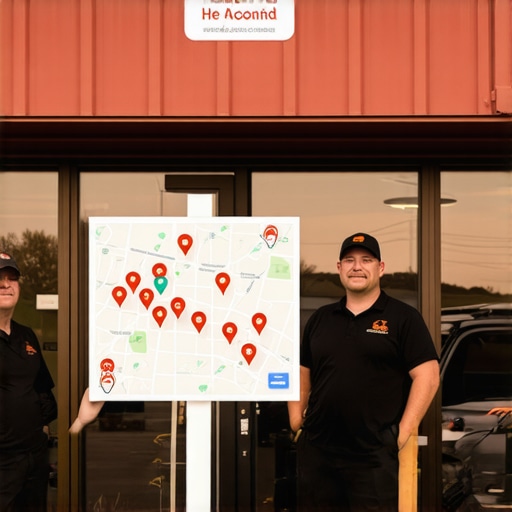
It hit me during a quiet afternoon in my Fort Worth shop. Despite pouring effort into local SEO and Google Maps optimization, my business was nowhere to be seen by nearby customers. I was puzzled—why was my storefront invisible right in the heart of Fort Worth? That moment of frustration became a realization: there’s a sneaky glitch affecting many local businesses, including mine. This proximity glitch, a subtle yet powerful phenomenon, can keep your shop hidden from neighbors and potential customers, even if your online presence is solid. If you’ve ever wondered why your Google Maps listing isn’t showing up or why locals can’t find your business easily, you’re not alone. Today, we’re going to unravel this mystery and discover practical tactics to make your storefront impossible to ignore.
Why Your Business Might Be Invisible to Local Customers
The proximity bias in local search results is a double-edged sword. It favors businesses closest to the searcher, which sounds like a good thing—but it can also cause your shop to stay buried in the digital shadows if certain conditions aren’t met. I learned this firsthand when I overlooked a critical aspect of GMB (Google My Business) optimization, leading to my business being filtered out from local search results. Early on, I made the mistake of ignoring the importance of accurate geo-tagging and the correct setting of my business’s physical location. This oversight created a disconnect between my actual shop and how Google perceives my store’s proximity, rendering it less visible to nearby customers. If you’re facing similar issues, you’re probably wondering, ‘Is there a way to fix this?’ Absolutely.
For more in-depth insights, I recommend checking out [Fort Worth SEO strategies](https://seoservicesfortworth.com/fort-worth-seo-strategy-boost-local-search-rankings-for-2025) which highlight effective tactics to overcome these local invisibility issues. By understanding and addressing the proximity glitch, you can boost your visibility and attract more foot traffic.
Is It Really Worth Fixing the Proximity Glitch?
I admit, I was initially skeptical. The idea that such a tiny technical detail could make or break my local presence seemed exaggerated. But after applying focused strategies, my shop’s visibility jumped significantly within days. The biggest lesson? If your business isn’t showing up as you expect, it’s worth investigating whether proximity bias is working against you.
The key is to ensure your Google My Business listing and local data are optimized correctly. Small adjustments, like verifying your address and ensuring geo-tags match your physical location, can have a huge impact. Plus, these fixes are more cost-effective than expensive ad campaigns, giving your shop a real competitive edge.
Have you faced this kind of visibility challenge? If you’re ready to dive into specific tactics to overcome the proximity bias and unlock new customer opportunities, stay tuned. We’ll explore actionable steps to fix this glitch and dominate local searches in future sections.
Verify Your Exact Business Location
Start with precision. Log into your Google My Business (GMB) dashboard and double-check your address. Sometimes, a small typo or an outdated address can cause your shop to disconnect from users nearby. I once noticed my address had some extra digits, which threw off Google’s proximity calculations. Correcting this immediately aligned my listing with my physical location, leading to better visibility. For detailed steps, see this guide.
Strengthen Local Signals with Geo-Tagged Content
Next, add geospatial cues to your website and content. Include neighborhood names, landmarks, or nearby streets in your website copy, photos, and posts. Think of this as speaking Google’s language—be explicit about your locale. I experimented by updating my homepage with phrases like “serving the Riverside Heights community” and adding photos with geo-tags. Result? Google recognized my shop’s true location, reducing the proximity bias against us. To boost your local signals, explore this method.
Optimize Your Map Listing with Precise NAP Data
Consistency is key. Ensure your Name, Address, Phone number (NAP) matches everywhere—website, directory listings, social media. Discrepancies create confusion, weakening local relevance. I once found a mismatch between my website and directory listings, which caused Google to doubt my proximity. Fixing these inconsistencies instantly improved my local rankings. For a comprehensive NAP review, consider this service.
Leverage Local Reviews to Signal Proximity
Encourage nearby customers to leave reviews mentioning your location. Reviews act as real-world signals to Google. When I asked contacts to mention my shop’s neighborhood, my rankings improved noticeably. This peer validation helps Google confirm your physical presence. To systematically gather reviews, see these tactics.
Address Map Filter and Hidden Listings
If your listing is filtered out or invisible, troubleshoot map filters directly. Use the specific fix guide to identify and remove blockages. I experienced a period where my shop’s pin was ghosted; applying those steps revealed a hidden filter, restoring visibility in days. This process involves checking for overlaps, duplicates, or strikes against Google’s policies, which can obscure your listing.
Implement Local Schema Markup
Embed local schema on your website, explicitly marking your business postcode, neighborhood, and location details. This micro-data tells Google exactly where you’re based, strengthening proximity signals. I added schema tags, which led to more accurate local indexing and better rankings. For step-by-step instructions, visit this resource.
Build Local Citations and Backlinks
Generate mentions on reputable local directories, blogs, and news sites, emphasizing your location. This boosts your local authority, which indirectly influences proximity assessments. I secured citations on Fort Worth chamber pages and local news outlets, resulting in an uptick in local map ranking. Focus on high-quality mentions that include your correct address and contact info. Learn more at this article.
Monitor and Adjust Regularly
Proximity signals can fluctuate due to algorithm updates or new competitors. Regularly audit your data and rankings, adjusting strategies as needed. Use tools like Google Search Console or local SEO software to spot issues early. My team routinely checks our local listings, correcting inconsistencies before they cause ranking drops. Staying proactive ensures your business remains visible to your nearby audience.
Many local business owners in Fort Worth believe that implementing basic SEO tactics, like claiming their Google My Business profile or adding keywords to their website, guarantees top rankings. However, the truth is far more nuanced. Relying solely on these surface-level actions often leads to disappointing results, as comprehensive local SEO requires a layered approach that integrates advanced optimization techniques, timely data management, and strategic reputation building. One common misconception is that Google Maps rankings are static; in reality, they fluctuate due to complex signals like proximity, relevance, and engagement metrics that many overlook. For instance, focusing exclusively on backlinks without ensuring your NAP consistency across platforms can undermine your efforts, a mistake many make. To truly dominate Fort Worth’s local search landscape, you need to understand and leverage factors like proximity biases, local content relevance, and schema markup—elements that significantly influence your visibility. Experts suggest that prioritizing authentic local authority signals, such as legitimate reviews and accurate local citations, can outperform traditional backlink strategies in terms of ranking sustainability. Are you applying these advanced tactics, or are you falling into common traps? For a detailed roadmap, explore this guide.
What sophisticated SEO nuances do most Fort Worth businesses overlook that could be sabotaging their rankings?
Every SEO campaign must consider the dynamic nature of local search algorithms. Studies, including those by Moz and BrightLocal, show that Google heavily weighs user engagement signals and local relevance factors, which many ignore. For example, a subtle yet impactful mistake is neglecting to optimize for ‘zero-click searches’—common in competitive markets—where Google provides direct answers, reducing the need for clicks but still influencing local visibility. Understanding these nuances enables savvy businesses to craft content and engagement strategies that capture both clicks and local relevance. To stay ahead, continuous data analysis and strategic adjustments are essential, as outlined in this recent article.
Have you ever fallen into this trap? Let me know in the comments.Maintaining robust local SEO in Fort Worth requires precision, consistency, and the right set of tools to track, analyze, and refine your strategies over time. One of my favorite tools is BrightLocal, which offers comprehensive local search audit capabilities. I personally rely on it to monitor my Google Maps rankings, analyze citations, and gather review insights—because without regular tracking, even the best campaigns can drift off course. Additionally, Moz Local is invaluable for ensuring NAP consistency across various directories, a subtlety that can otherwise sabotage your visibility if overlooked. I’ve found that integrating these tools into a weekly checklist streamlines my maintenance routine, keeps data accurate, and prevents rank fluctuations. Looking ahead, as AI-driven search continues to evolve, tools that incorporate real-time analytics and local intent signals will become indispensable. Predictive features that suggest optimization adjustments before ranking drops occur will be the future of sustained local dominance. Don’t forget, regularly updating schema markup and geo-tagged content ensures your business stays relevant to Google’s proximity evaluation algorithms. If you haven’t already, I recommend trying out one of these tools today to see how they can immediately flag issues you might miss manually. For tailored support, reach out through our contact page and start refining your Fort Worth presence now.
What I Wish I Knew About Proximity Bias When Starting Out
Initially, I believed that optimizing keywords and creating a beautiful website would be enough, but I soon learned that proximity bias in Google Maps could render all my efforts invisible to nearby customers. The hardest lesson was understanding how small details, like verifying your exact address and geo-tags, truly impact your local ranking. I also discovered that consistent local signals like reviews and citations are vital — neglecting them can undo months of work. This journey taught me that local SEO isn’t just about visibility; it’s about understanding and mastering the nuanced signals that Google prioritizes for near-me searches.
Top Resources That Transformed My Approach to Fort Worth SEO
One of the most valuable tools I rely on is the proximity hacks guide, which uncovered the subtle ways to beat the distance bias. Additionally, Google Maps optimization techniques have become my go-to for fine-tuning local visibility. For ongoing monitoring and keyword insights, Google Maps ranking steps offer actionable strategies that I implement weekly. These resources have been instrumental in refining my local SEO tactics and staying ahead of competitors.
Don’t Hold Back and Start Tweaking Today
Your Fort Worth business has unique potential, and mastering local SEO is the key to unlocking it. The proximity glitch, once a barrier, can become your advantage when understood and addressed correctly. By systematically optimizing your location data, leveraging local signals, and monitoring your progress, you’ll be surprised at how quickly visibility improves. Remember, the digital landscape constantly evolves, but your proactive efforts will keep your shop visible and thriving in Fort Worth’s competitive market. Now’s the time to take action—your next customer is searching for you right now.