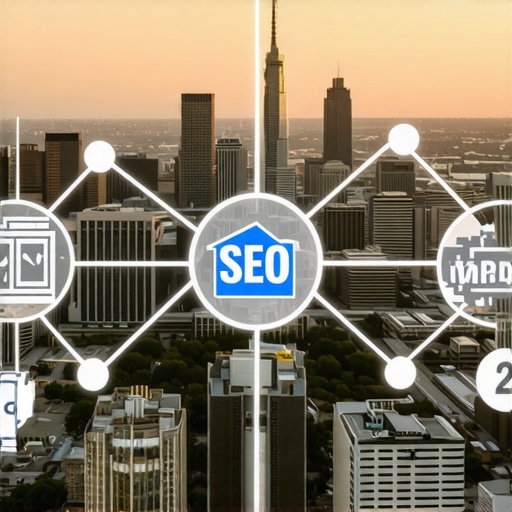
I remember the first time I realized my local business in Fort Worth was invisible on Google Maps. I had spent hours tweaking my profile, posting photos, and hoping for the best. But no matter what I did, my rankings stayed stubbornly low. It felt like shouting into the void. That lightbulb moment hit me hard: I was missing a crucial piece of the puzzle. If your Fort Worth business isn’t showing up where it matters most, you’re leaving customers right into your competitors’ hands. That’s why I want to share what I’ve learned about powerful local SEO strategies that actually work—and how you can implement them to see real growth.
Why Local SEO in Fort Worth Can Make or Break Your Business
Fort Worth is a vibrant city with fierce competition. Every coffee shop, plumber, or boutique is vying for that coveted spot on Google’s local pack. If your business isn’t optimized correctly, you’re basically invisible to the people who matter most—local customers actively searching for your services. According to recent studies, over 70% of consumers visit a store within five miles of their current location, and most of those visits start with a quick Google search. That means your Google Maps listing isn’t just a digital billboard; it’s your front door in the digital world. But here’s the catch—many local businesses are making the same mistake I did early on. They think just having a Google My Business profile is enough. Spoiler alert: it’s not. You need a comprehensive, strategic approach that considers every aspect of local search. Want to know how I cracked the code? Keep reading.
Is Google Maps Optimization Actually Worth the Hype?
I used to think that focusing on keywords and reviews was enough. I believed that once I had a decent profile, the customers would come. Turns out, I was dead wrong. My biggest mistake was neglecting the importance of consistent NAP (Name, Address, Phone Number) data and local backlinks. These tiny details made a huge difference once I corrected them. Today, I help clients avoid those early pitfalls by leveraging proven tactics that boost local visibility and outrank competitors. If you’ve been skeptical about the real impact of local SEO, I get it. But trust me, when done right, it’s like turning on a switch for new business. Curious how? I’ll walk you through the key strategies that transformed my approach and can do the same for you. And if you’re ready to take action, you can explore our detailed guide on [Fort Worth SEO Strategy to Boost Local Search Rankings for 2025](https://seoservicesfortworth.com/fort-worth-seo-strategy-boost-local-search-rankings-for-2025). Now, let’s dive into the secrets of making your business visible where it counts—on Google Maps and beyond.
Optimize Your Google My Business Profile for Maximum Impact
Start by claiming and verifying your Google My Business (GMB) listing if you haven’t already. Make sure your NAP (Name, Address, Phone Number) details are consistent across all online platforms—discrepancies hurt your rankings. Fill out every available field: business categories, hours, services, and a compelling business description. Upload high-quality photos that showcase your offerings and location—think of this as your digital storefront. Consistent updates and fresh content signal activity to Google, improving your visibility. For a step-by-step guide, check out this resource.
Many business owners in Fort Worth believe they know the ins and outs of local SEO, but in reality, some of the most widespread assumptions are actually misconceptions that can hinder your growth. Let’s dig deeper into what most people get wrong about local SEO strategies, especially when it comes to optimizing for Google Maps and local search rankings.
Why Believing More Reviews Always Means Better Rankings Is a Trap
It’s a common belief that flooding your Google My Business profile with as many reviews as possible will automatically catapult you to the top. While reviews are important, quality matters just as much as quantity. Google’s algorithms prioritize reviews that are genuine, relevant, and diverse. Fake or incentivized reviews can even backfire, leading to penalties or reduced trust from both Google and potential customers. Instead, focus on encouraging authentic feedback from satisfied clients and responding thoughtfully to reviews—this signals engagement and boosts your local credibility. For a more nuanced approach, consider leveraging advanced local SEO tactics that integrate reviews with other ranking factors.
Many Think NAP Consistency Is Enough — But It’s Not
Consistency of your Name, Address, and Phone Number (NAP) across all platforms is often touted as the key to local SEO success. While it’s true that inconsistent NAP data can hurt your rankings, that’s just the tip of the iceberg. Advanced local SEO requires synchronization of your NAP with your website schema markup, local backlinks, and citations from reputable directories. Ignoring these nuances means you’re leaving valuable ranking signals on the table. For instance, improperly formatted schema markup can make it harder for Google to verify your details, reducing your visibility in local packs. To avoid this common pitfall, check out our guide on Google Maps optimization.
Is It Still Worth Focusing on Keywords in Your Business Name?
Some believe that including keywords directly in their business name is a quick hack to rank higher. This might have worked years ago, but today, Google’s algorithms are much smarter. Overstuffing your business name with keywords can actually harm your local SEO efforts and reduce trustworthiness. Instead, focus on creating a compelling, keyword-optimized business profile that emphasizes your services and location naturally. Google favors signals like user engagement, relevance, and reviews over keyword stuffing. If you want to get ahead, explore advanced strategies to refine your local SEO approach.
Have you ever fallen into this trap? Let me know in the comments. Remember, mastering local SEO isn’t about quick wins—it’s about understanding the nuances that give you a lasting advantage. For more insights, I recommend checking out our comprehensive Fort Worth SEO strategy guide.
Maintaining a strong local SEO presence in Fort Worth isn’t a set-it-and-forget-it task. It requires consistent effort, the right tools, and a strategic approach that adapts to evolving search engine algorithms. Over the years, I’ve honed a toolkit of software and methods that keep my clients’ Google Maps rankings steady and even help them climb higher. Here’s how I stay ahead of the curve and ensure long-term success for local businesses.
How do I keep my local SEO performance consistent over time?
The key is leveraging specialized tools combined with disciplined routines. I personally rely on Google’s own suite, like Google Search Console and Google My Business Insights, to monitor visibility and spot fluctuations early. These free tools provide invaluable data on how users find your business and what keywords are driving traffic. Additionally, I use BrightLocal—which I find excellent for tracking citations, reviews, and local rankings across multiple locations—giving me a clear picture of my clients’ standing in Fort Worth’s competitive landscape.
For backlink analysis and local citation management, Ahrefs remains my go-to. Its detailed backlink profile insights help me identify authoritative sources for citations, which are critical for local SEO strength. I also use Moz Local to streamline citation consistency and NAP management, ensuring all listings are harmonized across directories. These tools work together to create a comprehensive picture of your local SEO health, enabling timely interventions.
Looking ahead, I predict that AI-driven insights and automation will become even more integral. Tools like SEMrush and SurferSEO are already integrating AI for content optimization and keyword suggestions, which can help you stay relevant in Fort Worth’s fast-changing market. Staying updated with these innovations ensures your strategies are scalable and future-proof.
Try This Advanced Technique to Boost Your Local Rankings
One strategy I recommend is implementing schema markup for local businesses. Proper schema markup helps Google understand your business details more precisely, which can enhance your visibility in local packs and rich snippets. I use the schema markup generator to create and test structured data on my clients’ websites. This small but significant step often results in noticeable improvements in local search results. Consistently auditing and updating your schema ensures your business remains at the top of Fort Worth’s local listings.
Don’t forget, maintaining your local SEO is an ongoing process. Regularly review your data, adapt your tactics, and stay informed about the latest trends. If you’re feeling overwhelmed or want expert assistance, our team is ready to help. Reach out through this contact page to discuss a tailored local SEO plan that keeps your Fort Worth business thriving for years to come.
< >
>
The Hardest Lesson I Learned About Local SEO in Fort Worth
One of the biggest surprises I faced was realizing that simply optimizing your Google My Business profile isn’t enough. I once thought that having a handful of reviews and accurate NAP data would suffice. But the real breakthrough came when I understood that ongoing engagement, local backlinks, and schema markup are what truly elevate your visibility in Fort Worth’s competitive market. This lesson taught me that local SEO is a marathon, not a sprint, and persistent effort pays off in long-term growth.
Three Myths About Google Maps Optimization That Held Me Back
I used to believe that more reviews meant higher rankings, and that keyword stuffing in my business name could shortcut success. Both ideas turned out to be misconceptions. Authentic reviews and natural keyword integration, combined with schema markup and citation consistency, are what drive results. Discarding these myths allowed me to focus on strategies that genuinely improve local search presence for my clients and myself.
What Experts Won’t Tell You About Fort Worth Local SEO
Many overlook the importance of schema markup and backlink quality in local SEO. These hidden signals are crucial for Google to verify your business details and authority. Using tools like the schema markup generator and Ahrefs, I learned that technical details often make or break your rankings in Fort Worth. Staying ahead means diving into these often-overlooked aspects and continuously refining your approach.
My Essential Toolkit for Fort Worth Local SEO
To keep my strategies sharp, I rely on Google Search Console and Google My Business Insights for real-time data, BrightLocal for citations and reviews management, and Moz Local for NAP consistency. Additionally, I trust SEMrush and SurferSEO for AI-driven content ideas. These tools have helped me build a resilient local SEO setup that consistently outperforms competitors in Fort Worth’s dynamic market.
Where to Go from Here
If you’re serious about dominating Fort Worth’s local search scene, don’t hesitate to implement advanced techniques like schema markup and backlink audits. Regularly review your data, stay informed about algorithm updates, and consider consulting with experts who can tailor strategies to your unique business needs. The path to visibility is ongoing, but with the right tools and mindset, you can turn your local SEO efforts into a powerful growth engine.
Your Turn to Take Action
Now that you know some of the less obvious lessons learned about Fort Worth local SEO, what’s the first step you’re going to take to improve your rankings? Share your plans in the comments below and let’s grow together!



This post resonates with my experience running a local bakery here in Fort Worth. I used to focus solely on getting reviews, thinking that would quickly boost my Google Maps ranking. But I realized that without consistent NAP data, schema markup, and quality backlinks, my efforts were half-baked. Implementing structured data and regularly auditing my citations really made a difference in visibility. One thing I’ve also found helpful is engaging with local community events and linking them back to my Google profile—Google seems to reward active local signals. Has anyone else tried integrating local event sponsorships into their SEO strategy? I’d love to hear if that helped boost your local rankings or customer engagement.
This post really hits close to home. I run a small furniture store here in Fort Worth, and I’ve seen firsthand how powerful local SEO can be when done right. Initially, I thought having a decent Google My Business profile was enough, but I quickly learned that ongoing efforts like schema markup and managing local citations are what truly move the needle. One challenge I faced was maintaining NAP consistency across numerous directories; using tools like Moz Local really helped streamline that process. I’m curious—how do others here keep their citation data synchronized as they grow? Do you prefer automation tools or manual checks? I also found that incorporating customer photos into my profile adds authenticity and improves engagement—does anyone have tips on encouraging customers to share their experiences visually? Looking forward to hearing more strategies. This thread is a goldmine for local business owners trying to crack the SEO code in Fort Worth.
Reading this post really struck a chord with me. I own a small bakery in downtown Fort Worth, and I’ve spent so much time focusing on getting reviews—believing that would be the magic bullet to higher rankings. However, I quickly realized that neglecting other local SEO components like schema markup, NAP consistency across directories, and active engagement on Google My Business was holding me back. Integrating local community events into my SEO strategy has also made a noticeable difference, especially when I link those events back to my profile. It’s interesting how these small but consistent efforts can add up over time.
One challenge I still face is maintaining citation accuracy as my business grows. I’d love to hear how other local entrepreneurs here keep their data synchronized across multiple listings. Do you rely more on automation tools or manual updates? Also, I wonder—what creative ways have you found effective for encouraging customers to leave reviews that are genuine and detailed? This discussion is incredibly insightful, and I appreciate everyone’s shared experiences. Truly, local SEO in Fort Worth requires patience and strategic effort, but seeing that progress is totally worth it. What other tactics have you found effective to keep your Google Maps rankings improving steadily?